Design by Kai
Open to full-time/contractThe Architecture of Scalable Design Systems in 2026
Why token-driven architectures, multi-brand parity, and strict governance models are crucial for enterprise product teams bridging the gap between Figma design tokens and production codebases.
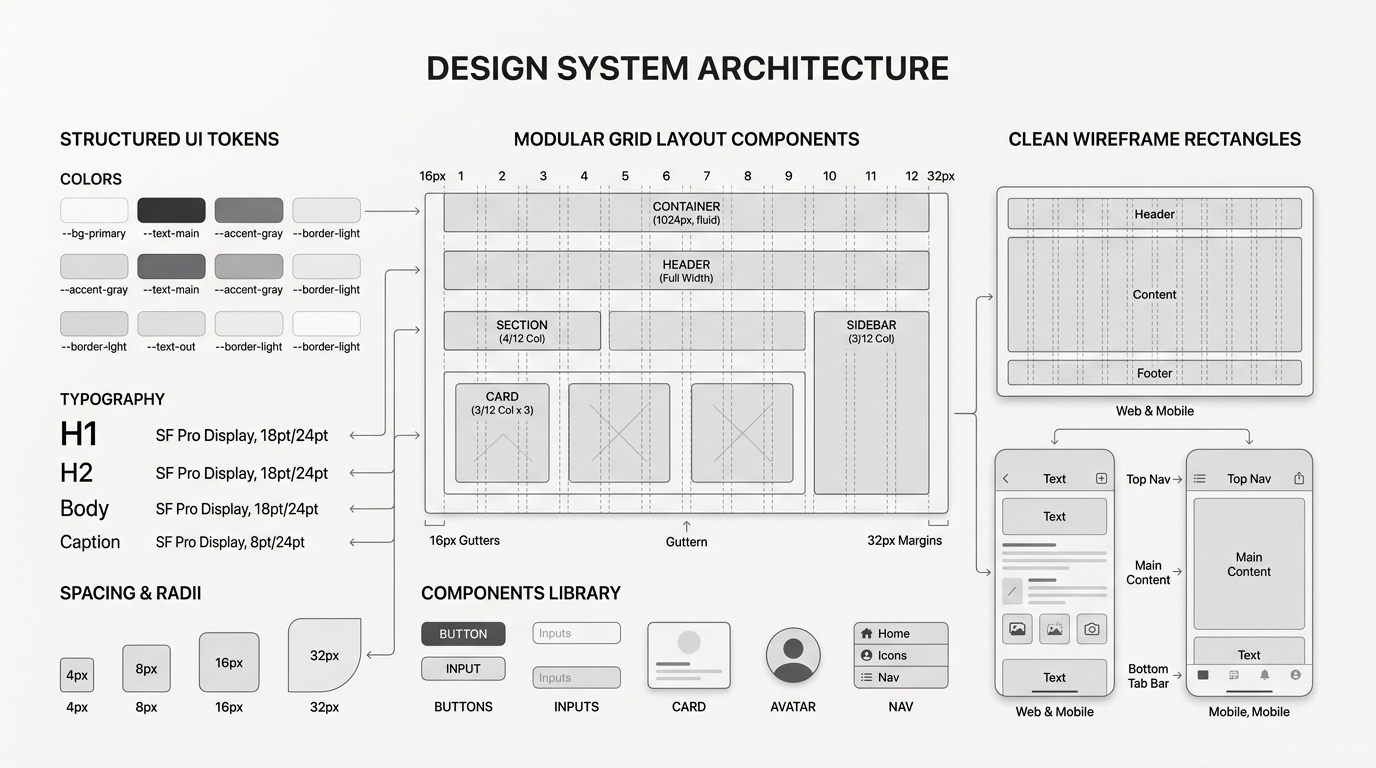
1. The Shift to Semantic & Mode-Driven Tokens
Over the last three years, design systems matured from simple visual component libraries into complex, multi-tiered architecture engines. Where teams once managed isolated HEX values and spacing integers, 2026 demands semantic abstraction layers capable of handling theme switching, density scaling, and multi-brand parity with zero runtime overhead.
“A design token is not just a variable; it is a contract between designer intent and engineered reality.”
2. Governance and CI/CD for Component Libraries
Without strict governance, design systems fragment within quarters. Enterprise platforms now integrate automated visual regression testing, accessibility linters, and versioned package releases directly into their continuous integration workflows. When a Figma token updates, the pipeline automatically issues a pull request across web and mobile repositories with generated diff previews.
3. Measuring Design System Adoption & ROI
Adoption is the only true metric of success. Tracking component detachment in Figma alongside component imports in production repositories provides product leaders with quantifiable data on developer velocity, visual consistency, and reduced maintenance debt.